
Scouting in the heart of the city.
An extracurricular programme for 5th graders, in the spirit of the scout movement.
Byspeiderne is a pilot project in planning, run by the association Nordlys.
In the programme, the children do activities every day, Monday to Friday. They move, practise knots, learn about the plants, trees, animals and insects in the schoolyard and city parks, and pick up practical skills that come in handy at home, like folding clothes and helping in the kitchen.
Values are the cornerstone.
First we practise being
brave
honest
kind
patient
thoughtful
trusting
determined
organised
consistent
humble
creative
friendly
Then we build on that with courtesy, honour and respect.
Every day of the week has its own focus. On Mondays, for example, the games work the upper body, and on Thursdays balance and coordination. The monthly programme has the same variety.
The programme is a common thread running through the whole day. The values we say at the start come back in play, in conversation and in the closing circle.
The first month is about becoming a group, home skills and nature. The next month's focus is drawing, calligraphy, vocabulary and more.
Every day we start by repeating our values. While the children eat, we watch two short films, one about the day's programme and one about the day's game, so the children know what to expect. Then the two instructors have a philosophical conversation with each other about the values, so the children hear different ways of thinking. At first the children listen, and as they grow confident, they join in themselves. Once the values have sunk in, we move on to new themes.
The day is full of play, movement and conversation. When we use a screen, we do it together and for something concrete, like a breathing exercise or a short film about nature.
We believe a team with good values becomes a strong team, one that helps every child succeed.
Byspeiderne is a place where children are seen, practise real skills and belong to a community. We emphasise cooperation, respect and helping each other, so that every child can feel safe and valued. We want the children to take the values home with them, to their families and friends.
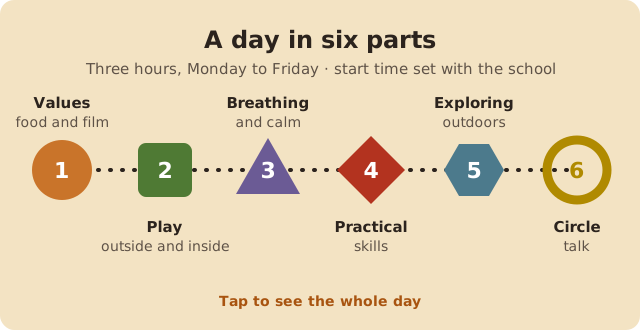

What a day looks like
Three hours every afternoon, Monday to Friday. We start about 15 minutes after the last class finishes at school, and the start time is set together with the school. Each day is divided into six parts.
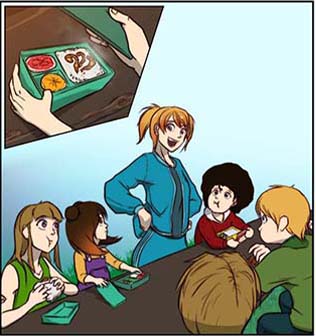
We say our values and eat
The first thing we do
We gather and say our values together. Then we go inside and the children eat from their lunchboxes, and they get fruit. We watch two short films, one about the day's programme and one about the day's game. Then the two instructors talk to each other about the day's theme, for example one of the values, so the children hear two different ways of thinking. Values give us direction, like a compass. Whatever happens, they can help us make good choices. Values are also closely tied to our self-esteem.
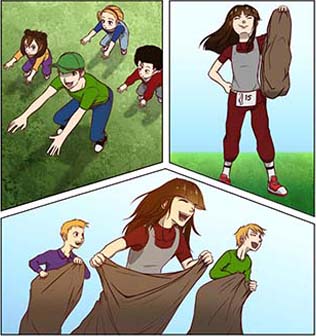
We play, outside and inside
How we train
Regular physical activity is good for body and mind. The Norwegian Directorate of Health recommends that children and young people are physically active for an average of 60 minutes a day. With us, the children move every day, through play and teamwork. We start with a little stretching that suits the day's game, then we play. The games vary from day to day. We use the gym when it is free, otherwise a classroom or the outdoor area.
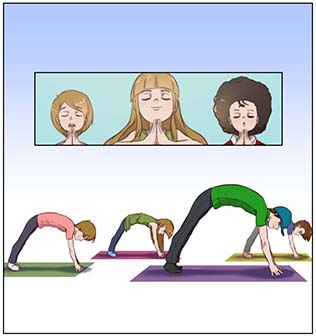
We breathe and calm down
How we wind down
Calm breathing can help children settle and become more attentive after an active day. Back in the classroom, we breathe together, with help from audio or film. We begin with the simplest exercises and just a few minutes, and build up little by little.
We practise practical skills
How we build motor skills
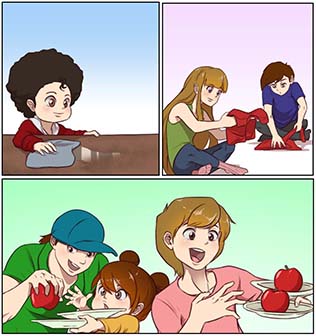
Practical everyday skills give children a sense of achievement and train fine motor skills and coordination. We practise things like buttoning a shirt, peeling potatoes and carrying several plates at once. The theme changes from period to period: first home skills, later for example colours, music, numbers or skills for the forest.
We explore
How we take a calm break
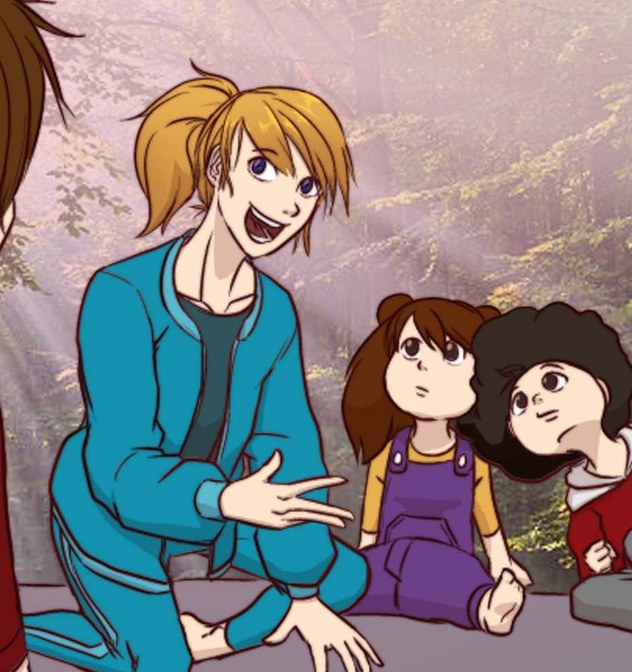
Calm, varied activities, most often outdoors in the schoolyard or the neighbourhood. The children get a small task, for example finding three different leaves, listening for five sounds or counting birds. It is a break from sitting and paying attention, and a way to get to know the nature right outside the school. If the weather is bad, we take a shorter walk or explore indoors.
We talk together in a circle
How we end the day
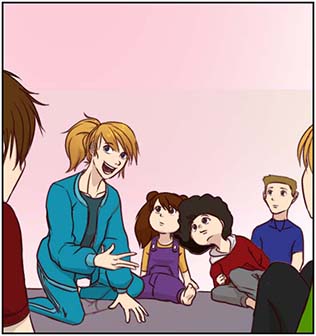
Towards the end of the day we sit in a circle. First the instructors tell what they have done today, and then the children repeat what they have done, one by one. This makes it easier to speak in a circle, and easier to answer when parents ask: “What did you do today?” We use a talking stick, so everyone gets a turn to speak.
What parents wonder about
Two instructors, always
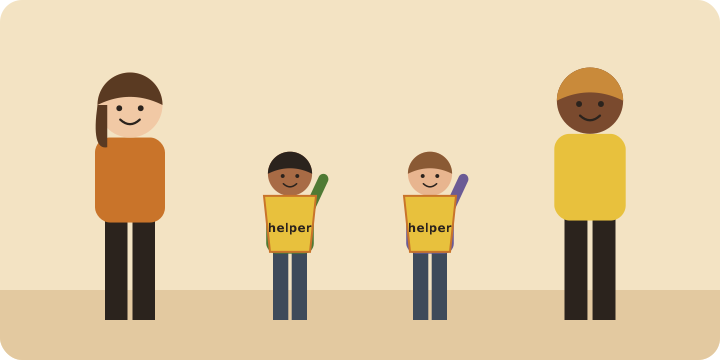
There are always two adults with the children. They share the tasks between them and have been trained in how the day is run.
The children help out
Every day, two of the children are helpers for the instructors. They take turns by a list, so everyone gets to try.
Everyone tries everything
We use a rotation list, so all the children get to try every activity and work with all the others, instead of ending up on a team with the same children every time.
The children bring a lunchbox
The children bring a lunchbox from home and eat from it while we watch two short films and talk about the day's theme.
We follow up every day
The instructors write notes every day about how the day went, and whether the games were popular, too hard or boring. That way we can improve the programme.
We tidy up after ourselves
We borrow the rooms at the school, and leave them looking as good as when we arrived, or better.
Do the children walk home alone, or are they picked up?
Many fifth graders walk home alone. At sign-up, parents choose whether their child may walk home alone or is to be picked up. Pick-up happens in a fixed time window towards the end of the day. If children live near each other, we are happy to help them walk together.
If your child is ill
If your child is ill, let us know by text message the same day. Children who are home from school because of illness do not come to us either. If a child becomes ill while with us, we call you straight away. The child rests in a quiet place where an adult can see them at all times, until you arrive. The day's helpers can lend a hand with small things. The fee is a fixed monthly price. If a child is away for a longer period, we talk together about the place.
Can you come to our school?
We are starting with a pilot at one school, and the location will be announced here before sign-up opens. Would you like Byspeiderne at your school? Send us an email with the school's name, and we will count how many want it.
The first days are a little different
The daily plan does not start at full speed on the first day. First the children get to know each other. We play more and shorter games and swap teams often, so that everyone gets to be on a team with all the others.
Once everyone has worked with each other, we introduce the whole daily plan step by step, with the values, the helpers and the rotation list. We want the children to understand the structure and want it, before we expect it to work. Then it becomes a safe framework, not something pushed onto them.
Our values
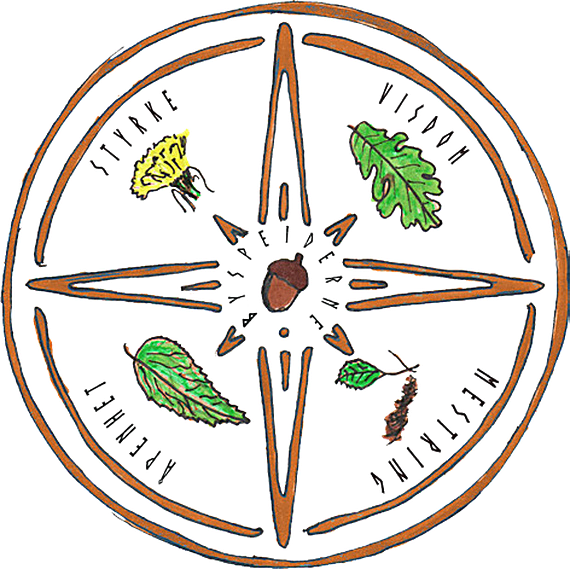
Strength
Strength is standing up for what you believe in.
Wisdom
Wisdom grows with time and patience.
Mastery
Mastery is setting goals and sticking with them.
Openness
Being open means daring to learn from others, and sharing what you know.
Choose a value
Tap a value and the compass will point to it.